
Sargent's Circle
He got by with a little help from his friends. Maybe we can too.

I’ve always known friendship is essential to a happy life, but lately I’ve wondered if it is also one of the keys to sustaining creativity. At the very least, it seems that some of my favorite artists were social butterflies.
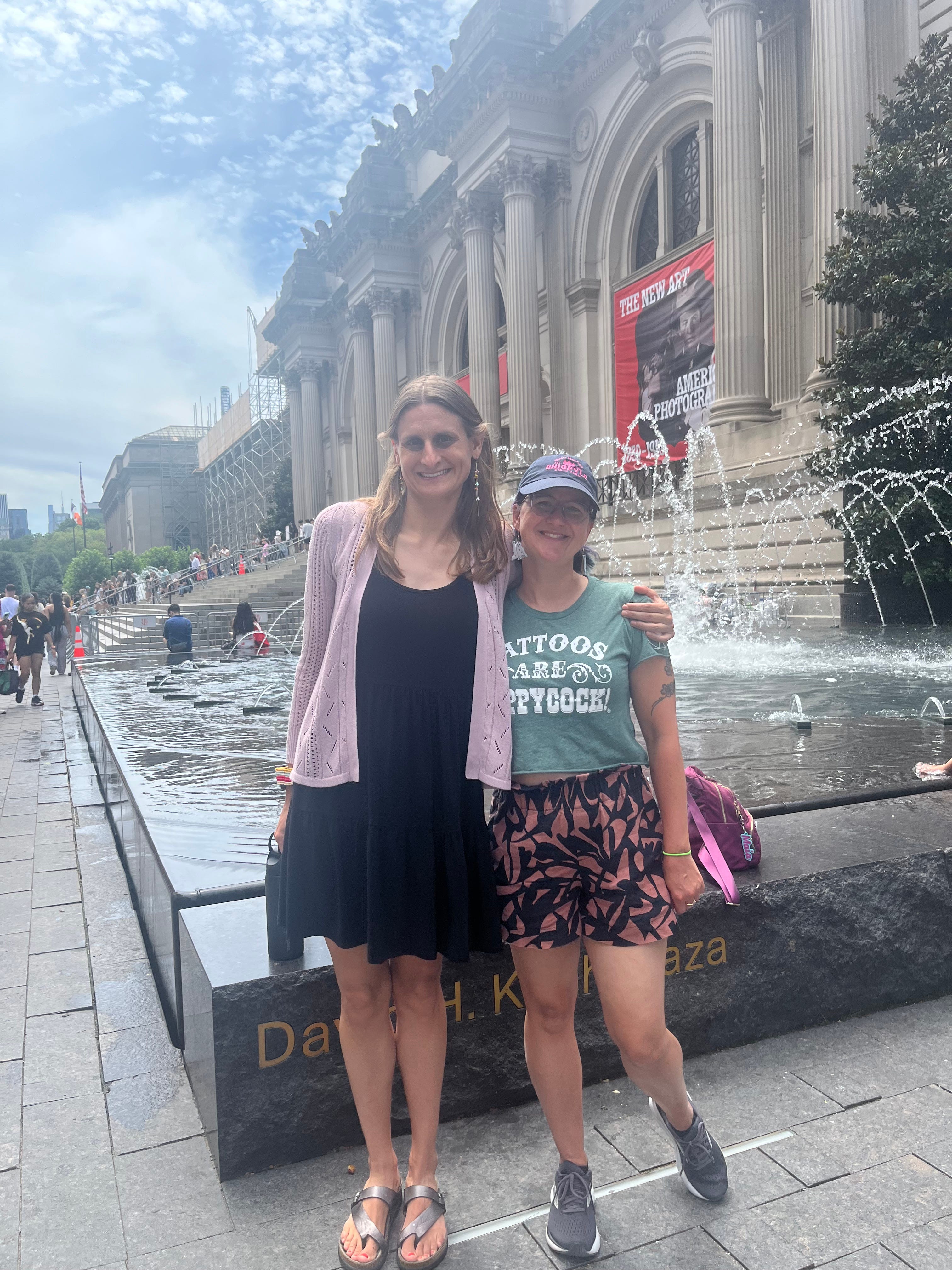
This has been on my mind ever since I went to New York City with my friend Maia. Every summer, we like to step into the air-conditioned galleries of a museum or two and let our tired minds get some creative refreshment. One of our big stops this year was the John Singer Sargent show at the Met. It’s a portraiture show, and we were absolutely wowed. Like, forget-how-much-your-feet-hurt, lose-track-of-time, walk-out-dazed, wowed. The brushstrokes, the movement, the cinched waists of the Parisienne women, the hot sun of the Mediterranean villages, the sense of it all having been effortless for him - it’s almost enough to make you want to quit painting yourself. And maybe I would have felt that way if the show hadn’t also reminded me of the power of a strong circle of friends.
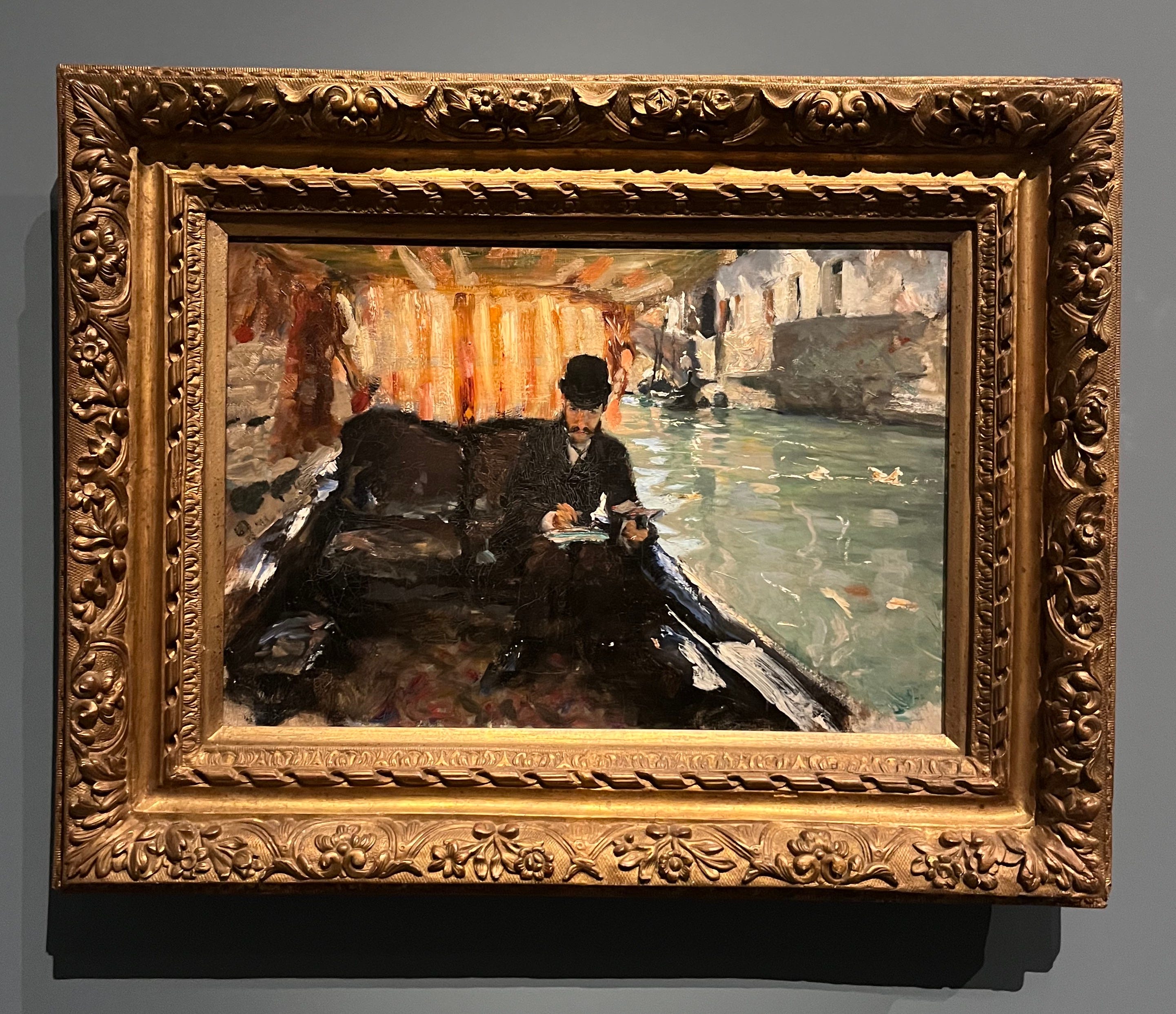
So many of the pieces in the show referenced Sargent’s social connections. For example, Ramon Supercaseux in a Gondola shows the Chilean diplomat working on a watercolor as Sargent paints both him and the watery scene around them. Ramon was the husband of Amalia Supercaseux, whom Sargent was hired to paint. Both of them became good friends of his. It’s a masterful painting, but it’s also a bit casual; there’s something slapdash and familiar about the way it is executed, the way you would paint if you were mid-conversation.
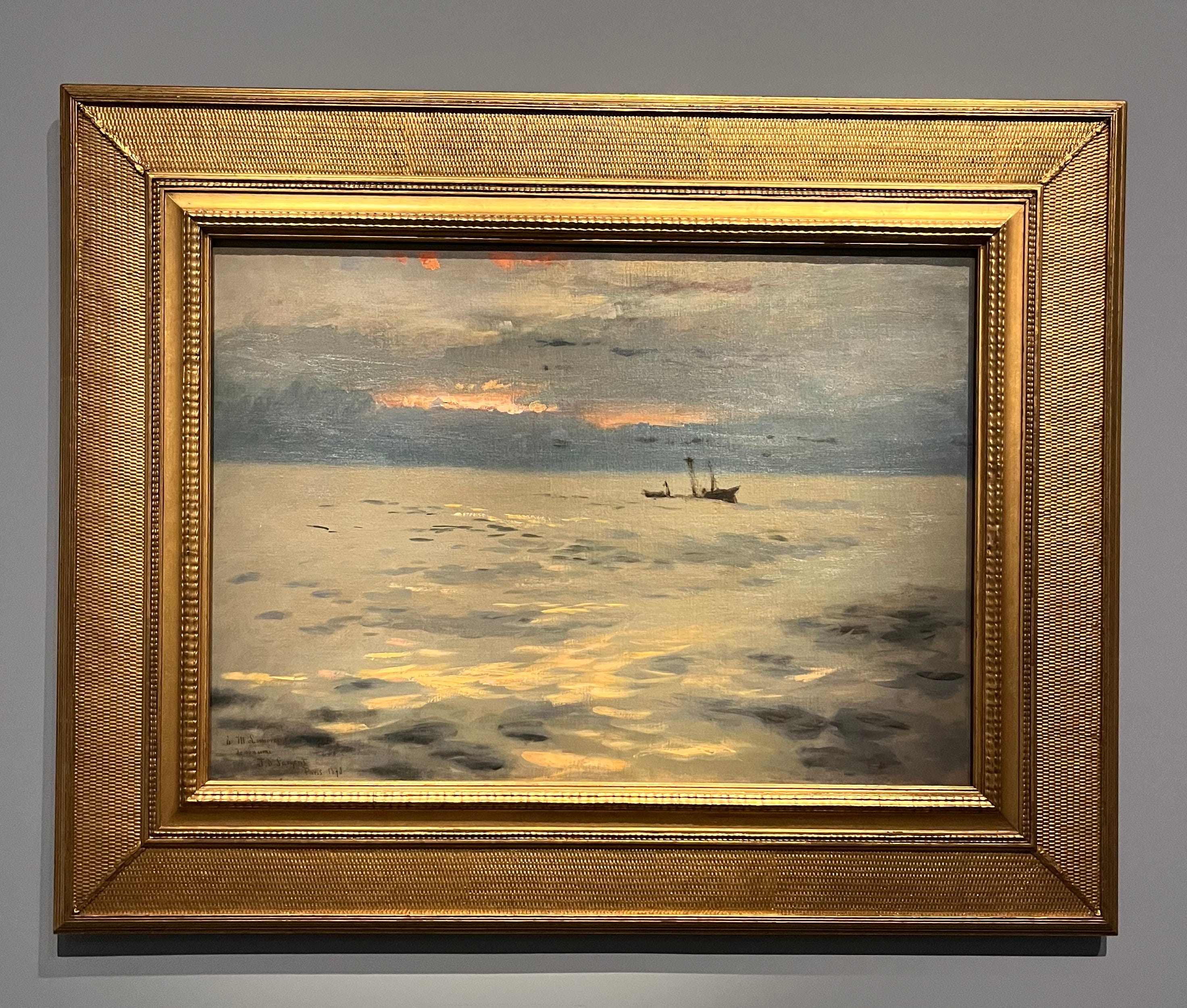
Sargent was also friends with Monet. Impressed by the Impressionist movement, he often asked Monet for advice on his plein air work. If you know Monet’s Impression Sunrise, with its misty shades of blue and its orange orb of a sun, you’ll see the influence in Sargent’s Atlantic Sunset, which also shows a flash of warmth amidst mostly cool shades. But the two men were more than colleagues, and their connection was not purely intellectual. Sargent visited Monet at his home in Giverny, and they exchanged regular letters.
Other pieces in the show highlighted Sargent’s connections to family. This painting of wineglasses and a table was made while Sargent was visiting them in Brittany. There’s an ease to this scene that, even though it feels old and French, also feels messy and human. I can believe that they all ate dinner at this table later on in the day. Rather charmingly, Sargent presented this piece to his teacher, Carolus-Duran, as a gift.
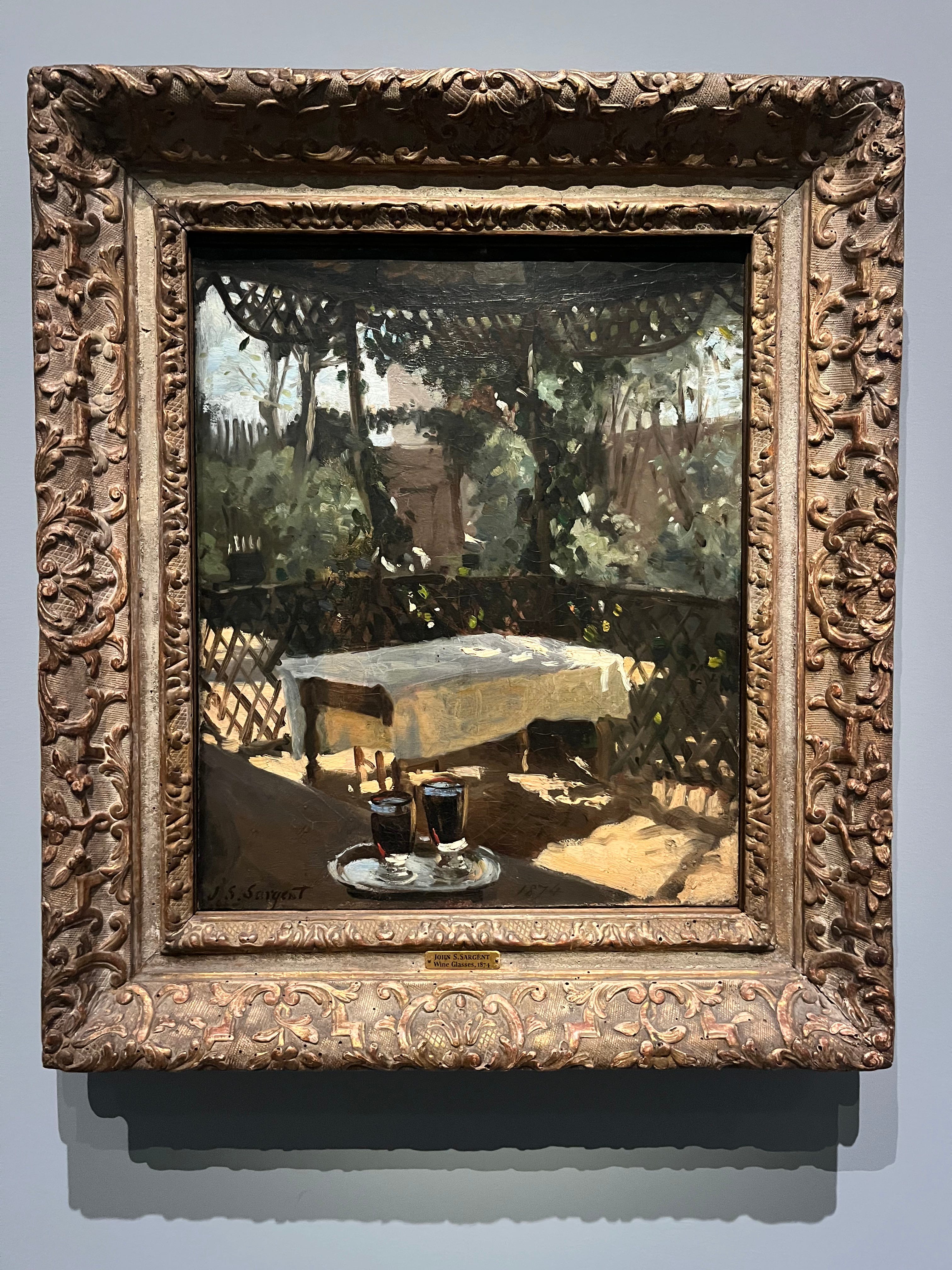
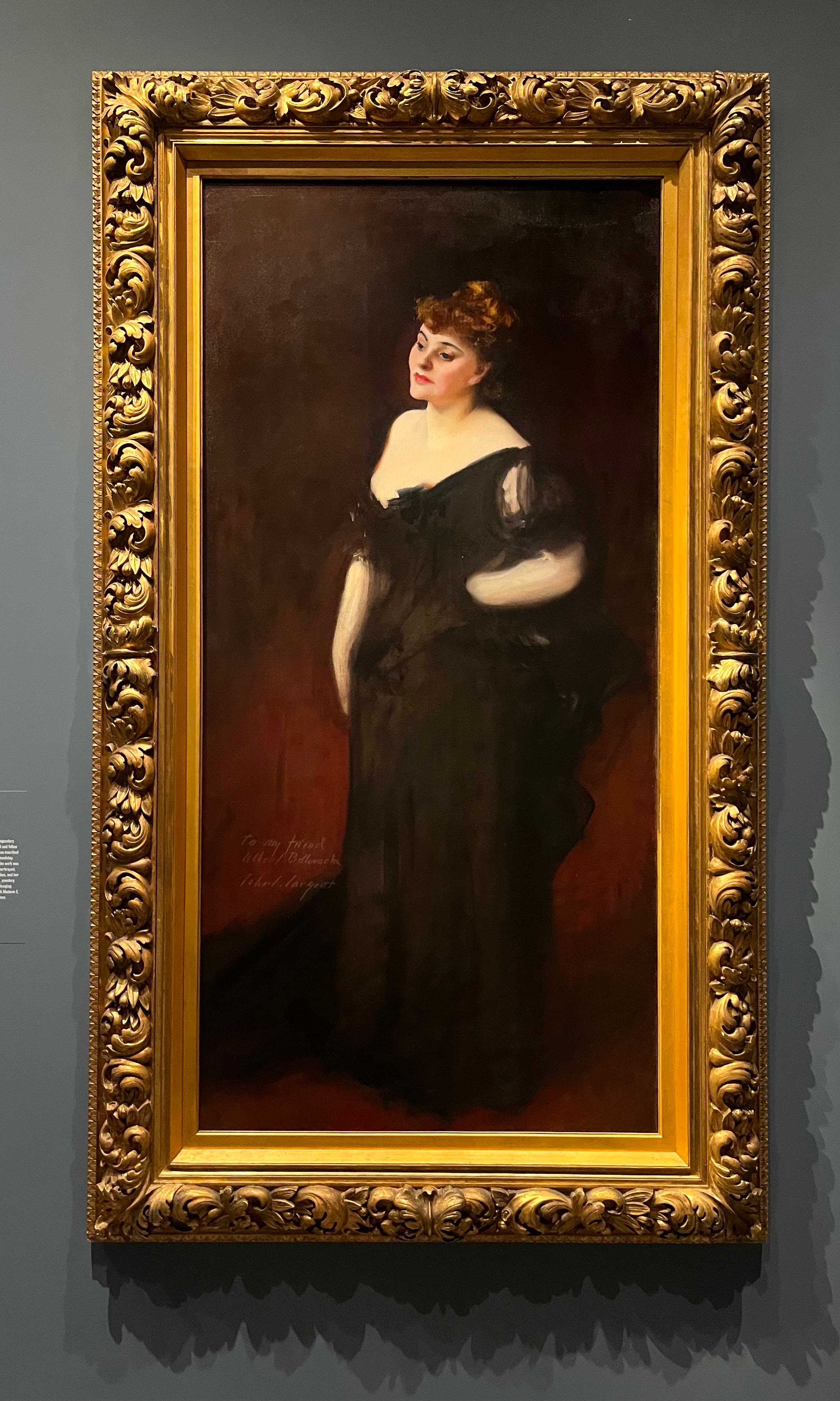
Years ago, I had an image in my head of what “real artists” were like. I thought they had lives that were somehow fancier, more removed from the everyday, than mine. And famous artists’ lives often do look that way in retrospect. But I’m not so sure it all felt glamorous in the moment. I like to think that the water sloshed against Sargent’s feet as he rode through the canal, and that the sun burned his forearms. Maybe a young nephew or cousin in Brittany was squabbling with their sibling as he tried to paint the wine glasses. Yes, he was the son of privilege, the most esteemed portrait painter of his generation — an expatriate at home from Florence to London, Tyrol to Maine. But wasn’t he also just living his life, and living it alongside other people?
Sargent’s most famous painting is Madame X. Both the extraordinary quality of the painting and the kerfuffle it caused make it among the most important pieces in the Met’s collection. I saw it again as part of this show, but I didn’t snap a photo, because, of course, I had seen it before. What I did snap a picture of was a small, intimate portrait of the same woman, Madame Gautreau. Here she is making a toast, her famous profile recognizable even in a different pose.
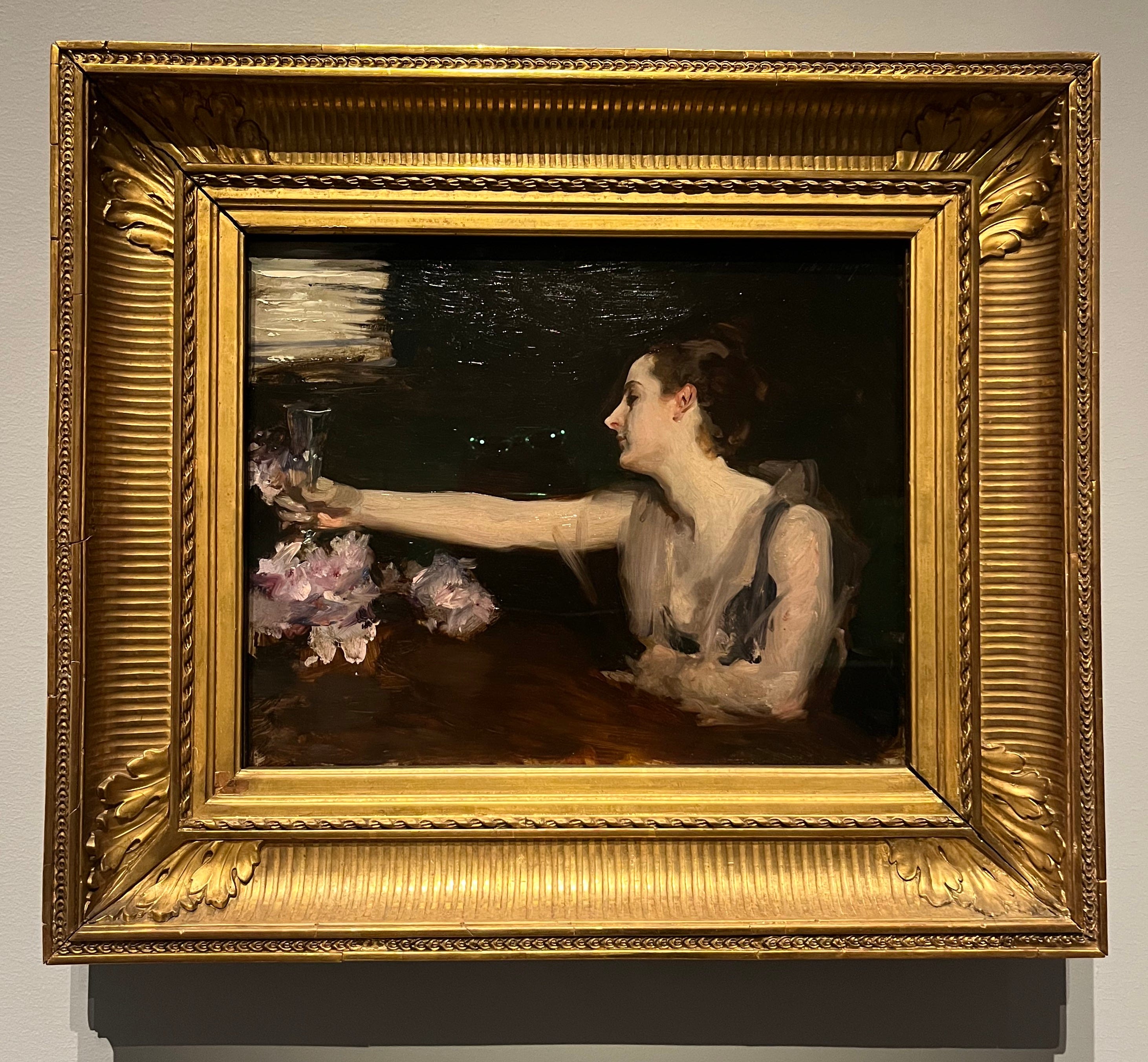
I’m not saying this piece is better than the large one, but it’s more revealing of who she is as a real person. I like the way her weight rests against her elbow, slightly lazy, like the night had already gone on too long. I like the mysterious dark void as well. Maybe this is not her first drink.
If Sargent’s large portraits are enough to overwhelm me, to make me think I should pack up my paints and leave art to the true masters, pieces like this make me feel like I should keep going. Maybe sometimes the subject of a painting is just a woman who is very tired. Maybe some pieces can be very small. Maybe the people you already know can be a part of the work you are doing.
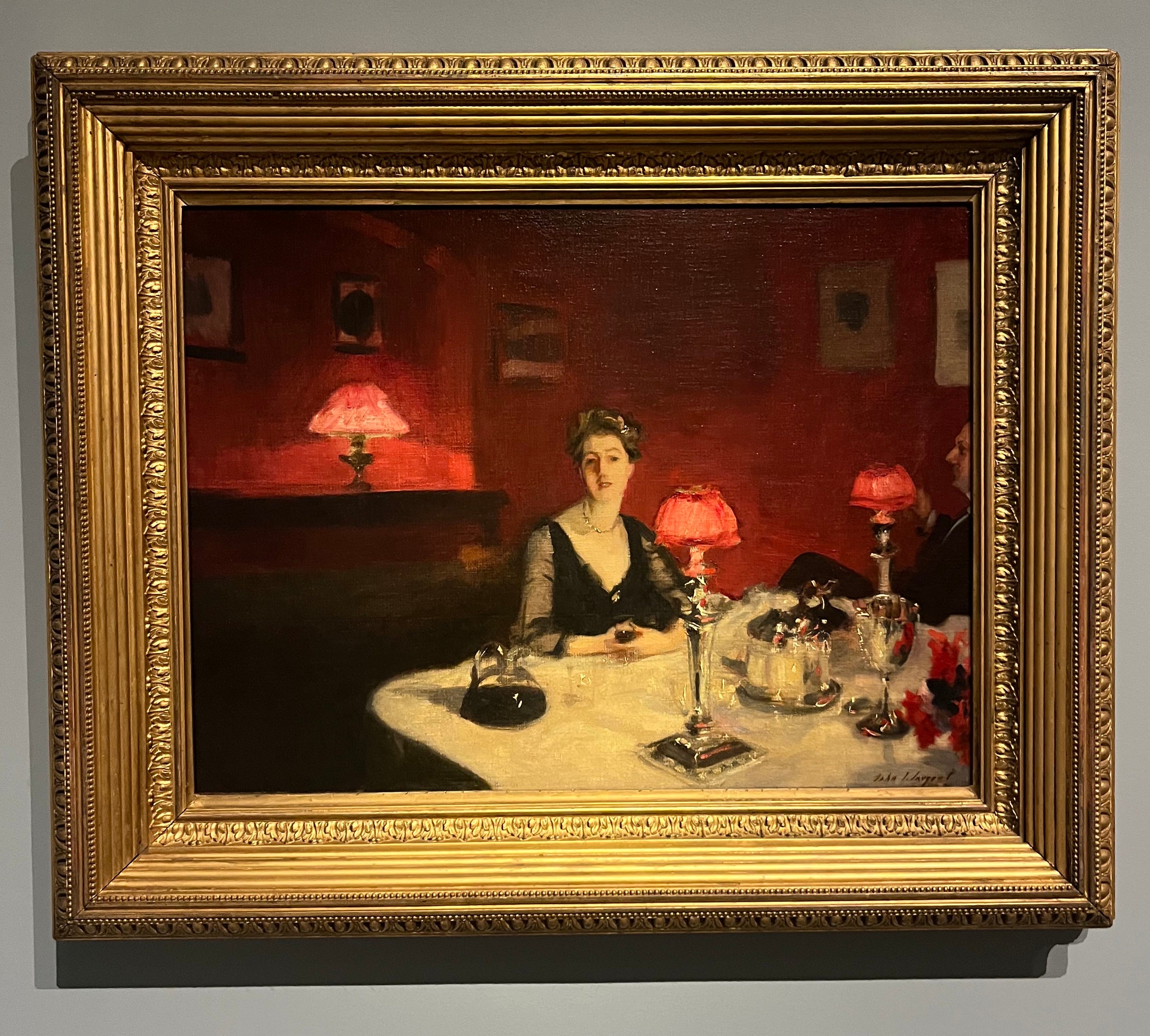
After the scandal of Madame X (it was seen as vulgar, too much skin, too suggestive), Sargent retreated from Paris to London. One of my favorite paintings from this period is Le Verre De Porto, a scene showing his good friends Albert and Edith Vickers in their dining room in the English countryside. Albert is barely visible off to the side, while Edith plays a central role, bathed in the reflected red light of the room’s walls. This casual cropping was perhaps a nod to artists like Degas, who were also cutting things off in this modern way. And, yes, the fact that Sargent was looking at the work of Degas is further evidence of the degree to which he was embedded in the social, intellectual world of his time.
Hopefully, the Romantic idea of the lone artistic genius is losing some of its grip by now, but if not, it’s worth challenging again. Periods of isolation can be useful for focus and productivity, but lives of isolation are not. Even some of the archetypal reclusive artists (like Emily Dickinson) maintained an extensive social network through letter-writing. It’s not surprising that Sargent surrounded himself with people with whom he could float down a Venetian canal and bounce around some ideas. Frankly, this is part of why my friend Maia (also an artist) and I like to go to New York City together. Going alone is fine, but the experience is different when there is a social element. You talk more, remember more, and leave having really developed your thoughts. When the creative going gets rough, you can reminisce about the trip together.
And talk we did. Before we left the city, Maia and I stopped at Gandhi Cafe in the West Village. It’s not a fancy place - the colorful decorations pinned to the walls have a homemade quality, and the tables are close together, forcing a strange intimacy with the other diners. But for us, because the food was good and it offered a chance to talk, it was luxurious. We split an order of garlic naan, Chana Saag, Chicken Tikka Masala, and even some white wine. Why order lightly, when the whole point is to be together?
I am so glad I found this wonderful review you did of the show- I feel like I got to see it! These photos are amazing, such great choices. I had never seen that sunset he did with the echoes of Monet. I want to read the letters between them now